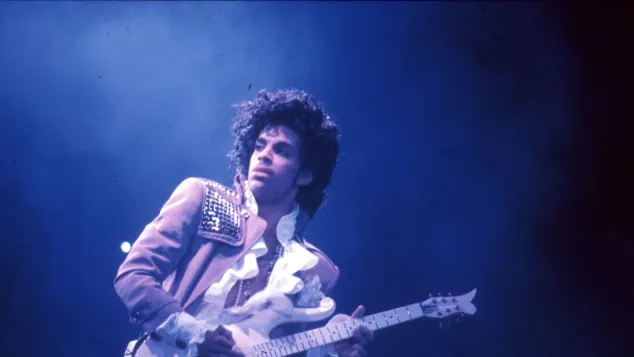
It was a Tuesday morning that changed the music world forever. On April 21, 2016, Prince Rogers Nelson was found unresponsive in an elevator at his Paisley Park studio in Minnesota.
The artist, who moved generations with songs like "Purple Rain", "Kiss", and "When Doves Cry", died at the age of 57 from an accidental overdose of the painkiller fentanyl. For years, he had quietly battled chronic pain—a struggle he largely kept hidden from the public.
Today, a decade later, it’s clear the world has never truly let go of Prince. If anything, his presence feels stronger than ever. His music is experiencing a powerful resurgence through tribute events, curated playlists, vinyl reissues, and a growing wave of attention on social media.
Also interesting:

Family shares tribute

25 years after her breakthrough
Kate Hudson Turns 46: 3 Children From 3 Men & Happier Than Ever
The Man Behind "Purple Rain": A Global Icon Shaped by Struggle
Born on June 7, 1958, in Minneapolis, Prince grew up in a musical but turbulent household. His parents separated when he was just seven years old. He taught himself to play piano and, at times, lived away from home with family friends. That quiet, introspective boy would go on to become one of the most prolific and influential artists in music history.
His breakthrough came in 1984 with the album and film "Purple Rain". Selling over 25 million copies, it catapulted him to global superstardom. What followed were timeless hits like "1999", "Cream", and "Raspberry Beret", as well as the iconic 'Batman' soundtrack. Over the course of his career, Prince sold more than 100 million records and earned seven Grammy Awards, a Golden Globe, and an Academy Award for Best Original Song.
A Personal Tragedy That Shaped His Art
Behind the electrifying stage persona was a man marked by deep personal loss. In 1996, Prince married dancer Mayte Garcia. That same year, their son, Boy Gregory, was born with a rare genetic condition and passed away just days later. The tragedy left a profound impact on both parents, and their marriage ended two years later.
That grief found its way into his music. Beneath the sensuality and showmanship, many of Prince’s ballads carry the quiet weight of heartbreak, resilience, and emotional depth.
Prince in 2026: A Legacy Reignited
Ten years after his death, Prince’s legacy is more visible than ever. In 2026, tribute events around the world are honoring his life and work. Radio stations are dedicating special programming, live performances are celebrating his catalog, and fans continue to gather at Paisley Park—now a museum—to pay tribute.
His music is also reaching new audiences. Songs like "Raspberry Beret" and "Purple Rain" are resurfacing in curated playlists, film and TV soundtracks, and on platforms like TikTok—not as nostalgia, but as living, evolving pop culture moments. A new generation is discovering what longtime fans have always known.
A Sound That Transcends Time
Prince’s artistry defied boundaries. He seamlessly blended funk, rock, R&B, soul, jazz, and pop—often playing nearly every instrument on his recordings himself. His talent was singular, his vision unmatched.
He was inducted into the Rock and Roll Hall of Fame in 2004, and his legendary 2007 Super Bowl halftime performance remains widely regarded as one of the greatest of all time.
Even now, his story isn’t finished. Inside Paisley Park lies the “Vault,” a vast archive of unreleased material. Fans continue to hope for new releases from this treasure trove, ensuring that Prince’s voice will echo for years to come.
Rest in Peace, Prince
Ten years have passed, yet it feels as though he never truly stopped singing. His music remains the most powerful tribute of all—timeless, fearless, and unforgettable.
Rest in peace, Prince Rogers Nelson. The world is still listening.