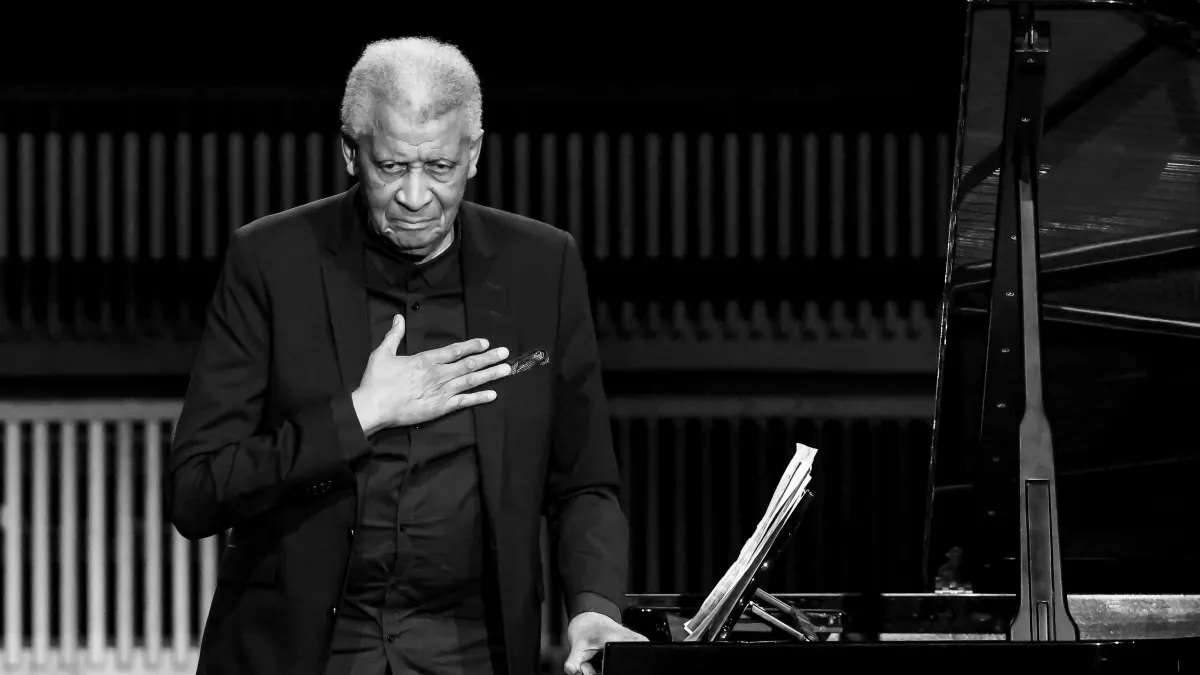
The jazz world is mourning the loss of Abdullah Ibrahim. The acclaimed South African pianist, composer, and multi-instrumentalist passed away at the age of 91, surrounded by his family after a brief illness. Most recently living in Upper Bavaria, he remained closely connected to a musical legacy that reached far beyond jazz. Ibrahim was celebrated as an artist of deep conviction whose music conveyed hope, resilience, and dignity to generations of South Africans. His passing marks the end of a remarkable life that spanned Cape Town, New York, and the Chiemgau region.
Abdullah Ibrahim Dies in Bavaria at 91
As reported by Welt, South African President Cyril Ramaphosa confirmed the news through the musician’s family. According to their statement, Ibrahim died peacefully on June 15 with his loved ones by his side. Ramaphosa honored him as a jazz icon, cultural activist, and global citizen.
"He has enriched our lives with his musical gifts and his involvement in making the world a better place. May his soul rest in peace," Ramaphosa said, according to Welt.
In 2009, Ibrahim received South Africa’s prestigious Order of Ikhamanga in Silver. His partner, Marina Umari, noted that despite living abroad, he always carried South Africa and its people in his heart.
Mannenberg Made Him a Symbol of Resistance
Ibrahim’s name is forever linked to Mannenberg, the powerful composition he created in the 1970s. The piece became an unofficial anthem of resistance against apartheid and came to symbolize the struggle for freedom and equality.
According to a widely shared account, recordings of the song even reached Nelson Mandela during his imprisonment. Years later, Ibrahim performed it at Mandela’s inauguration as South Africa’s first Black president. Many of his compositions—including works such as Soweto and Cape Town Flower—reflected the realities and hopes of his homeland.
From Dollar Brand to a Global Jazz Legend
Born Adolph Johannes Brand in Cape Town in 1934, Ibrahim initially performed under the name Dollar Brand before adopting his Muslim name following his conversion to Islam.
He rose to prominence at a young age through the Jazz Epistles and collaborations with trumpeter Hugh Masekela. His career later took him to Zurich and New York, where he worked alongside legends such as John Coltrane, Ornette Coleman, and Elvin Jones. His music became renowned for blending modern jazz with South African rhythms and traditions in a uniquely personal style.
Concert Plans Remained Until the End
Even in his final years, Ibrahim continued looking ahead. According to t-online, he had been scheduled to perform at Munich’s Hotel Bayerischer Hof in late July, with two additional concerts planned in Söllhuben, Upper Bavaria, later in the year.
His dedication to music never faded. Beyond the piano, he also played the flute, saxophone, and cello. One of his most memorable reflections captured his lifelong philosophy:
"At its core, music lies in the fact that it transcends all cultures, acting as a universal, unifying language," Abdullah Ibrahim once said, according to Welt.