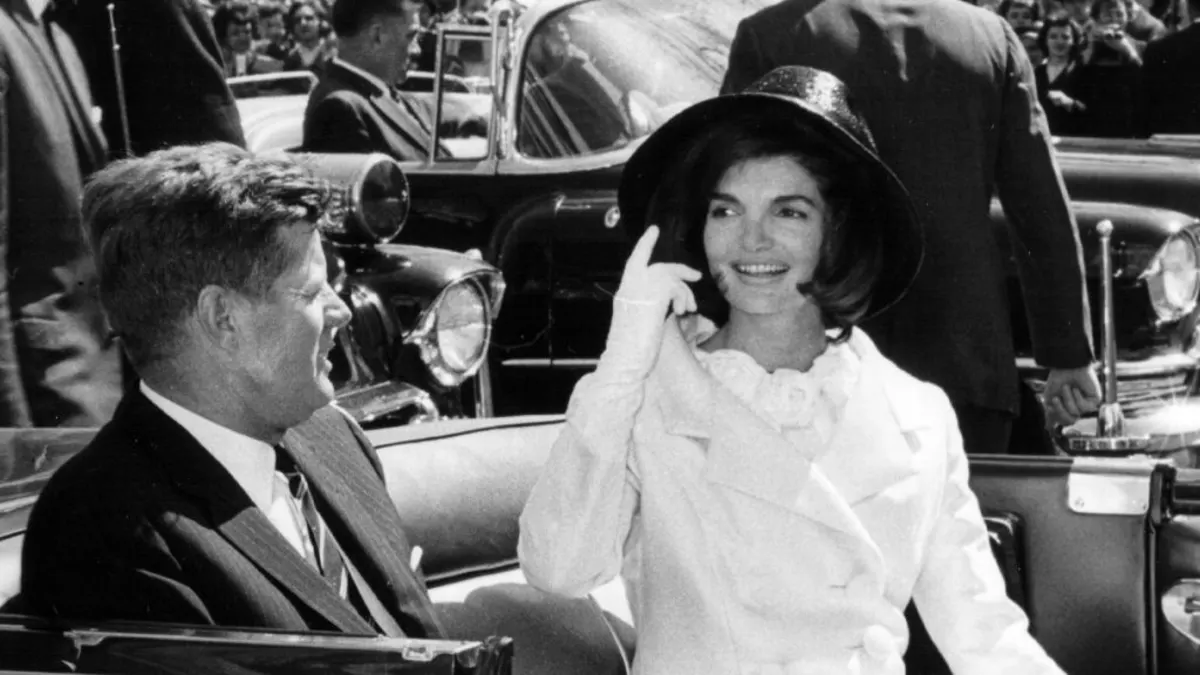
Jacqueline Kennedy Onassis left a mark on American culture that stretched far beyond the White House. The former first lady set a standard for polished dressing, from clean-lined suits to oversized sunglasses and elegant eveningwear, while building a life that balanced public symbolism with fierce privacy. Her death on May 19, 1994, closed a chapter that had long linked fashion, power and personal resilience. According to People Magazine, she died at age 64 after a battle with non-Hodgkin’s lymphoma, ending months of treatment largely carried out away from public view.
Jackie Kennedy Faced Cancer After a 1993 Hospital Stay
Her illness began to come into focus after a 1993 riding accident led to a hospital visit, where doctors found a swollen lymph node. By December, she had been diagnosed with non-Hodgkin’s lymphoma and began chemotherapy in January 1994. Even as treatment started, she kept part of her routine intact and continued working as a book editor at Doubleday several days a week. That discipline matched the image she had carried for decades: controlled, refined and deliberate, whether in public life, publishing or the personal presentation that made her wardrobe part of her cultural legacy.
Nancy Tuckerman Shared an Early Update on Her Prognosis
When her diagnosis became public, her spokesperson offered a hopeful message. "There is an excellent prognosis," Nancy Tuckerman told People Magazine. At the time, doctors were said to be optimistic, but her condition changed quickly in the months that followed. By March, the cancer had spread to her spinal cord and brain, and by May it had reached her liver. The progression was devastatingly fast. Still, the image many remembered was not one of decline, but of composure — the same restraint that defined her public appearances and enduring influence on American elegance.
John F. Kennedy Jr. Described Her Final Hours at Home
In her last days, Jackie Kennedy chose home over the hospital. She left New York Hospital on May 18, 1994, and returned to her Upper East Side apartment, where she spent her final hours surrounded by family, friends and the objects she loved. After her death, her son spoke briefly outside the building. "She was surrounded by her friends and family and her books and the people and the things that she loved. And she did it in her own way, and we all feel lucky for that, and now she’s in God’s hands," said John F. Kennedy Jr.
Arlington Burial Closed a Life Framed by Style and History
Her funeral took place on May 23, 1994, with a private mass at the Church of St. Ignatius Loyola in New York before burial at Arlington National Cemetery beside President John F. Kennedy. The details were understated and deeply in line with her image: a mahogany casket, ferns and a white cross of lilies-of-the-valley. That restraint echoed the visual language she had made famous over decades. Jackie Kennedy’s legacy still lives in political history, publishing and fashion, where her preference for simplicity, structure and quiet luxury continues to shape how classic American style is understood.