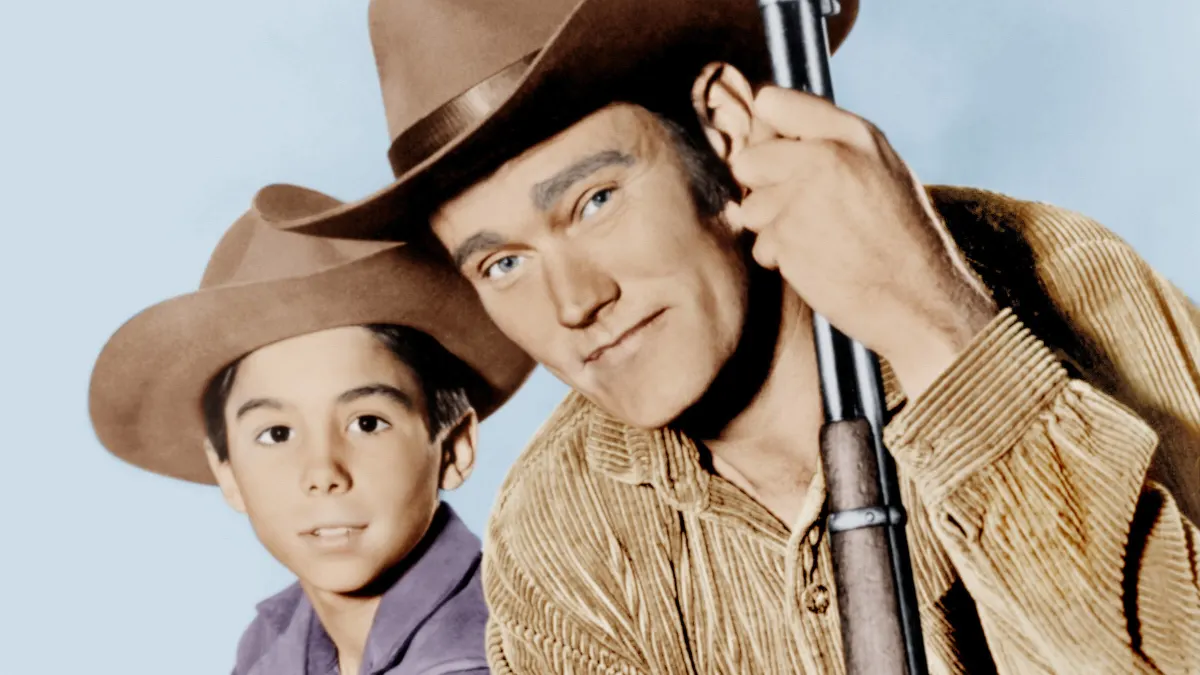
When The Rifleman premiered in 1958, television westerns were everywhere. Yet this series carved out its own place by putting family at the center of frontier life. The story follows veteran Lucas McCain, a former Union soldier trying to rebuild his life after the Civil War while raising his young son alone. That setup gave the show a deeper emotional base than a standard action drama. The series ran until 1963 and became a successful part of the era’s packed TV landscape.
Lucas McCain Carries War and Grief Into the Story
Lucas McCain is not introduced as a carefree hero riding into town for adventure. He is a widower and a former soldier, shaped by conflict before the story even begins. That history matters. His life after war is defined by responsibility, not glory. The loss of his wife leaves him with a different kind of battle: building a stable home for his son. This gives the series a strong dramatic engine. Every decision Lucas makes carries the weight of survival, discipline, and the need to protect what remains of his family.
Father and Son Drive the Series Beyond Gunfights
What sets the show apart is its focus on parenting. Lucas is not just a marksman or rancher. He is a father first, and that role often creates the real tension. Raising a child in a rough frontier setting is presented as a daily challenge, one that can be harder than facing open danger. The premise makes clear that caring for his son becomes even more complicated than fighting a brutal war. That contrast gave the series heart while keeping its western identity intact.
The 1958 to 1963 Run Built a Lasting TV Legacy
The series aired for five years, from 1958 to 1963, a strong run during one of television’s busiest western periods. Longevity alone does not explain its reputation. The show balanced action with moral questions, which helped it stand out among programs built mainly around shootouts and simple heroes. Lucas McCain represented a more layered lead character, one whose past and personal losses shaped the future of every episode. That structure helped the drama connect with viewers who wanted more than frontier conflict and weekly danger.
A Classic Western Formula With Strong Human Stakes
Even decades later, the appeal of the show is easy to understand. It delivers the expected western elements—small-town pressure, danger, and a capable lead—but grounds them in family life. The result is a series where emotional stakes matter as much as physical ones. Lucas is trying to raise his son with values, resilience, and caution in a world that rarely offers peace. That blend of action and parenthood is why the program still holds a place in conversations about classic TV westerns and enduring small-screen drama.